Topwater lures
Float on the surface and create splashes or ripples. Often useful in calm conditions or low light.
Tackle choices can feel overwhelming in fishing games with large inventories. This article explains the main types of lures and bait and how to think about matching them to the situation.
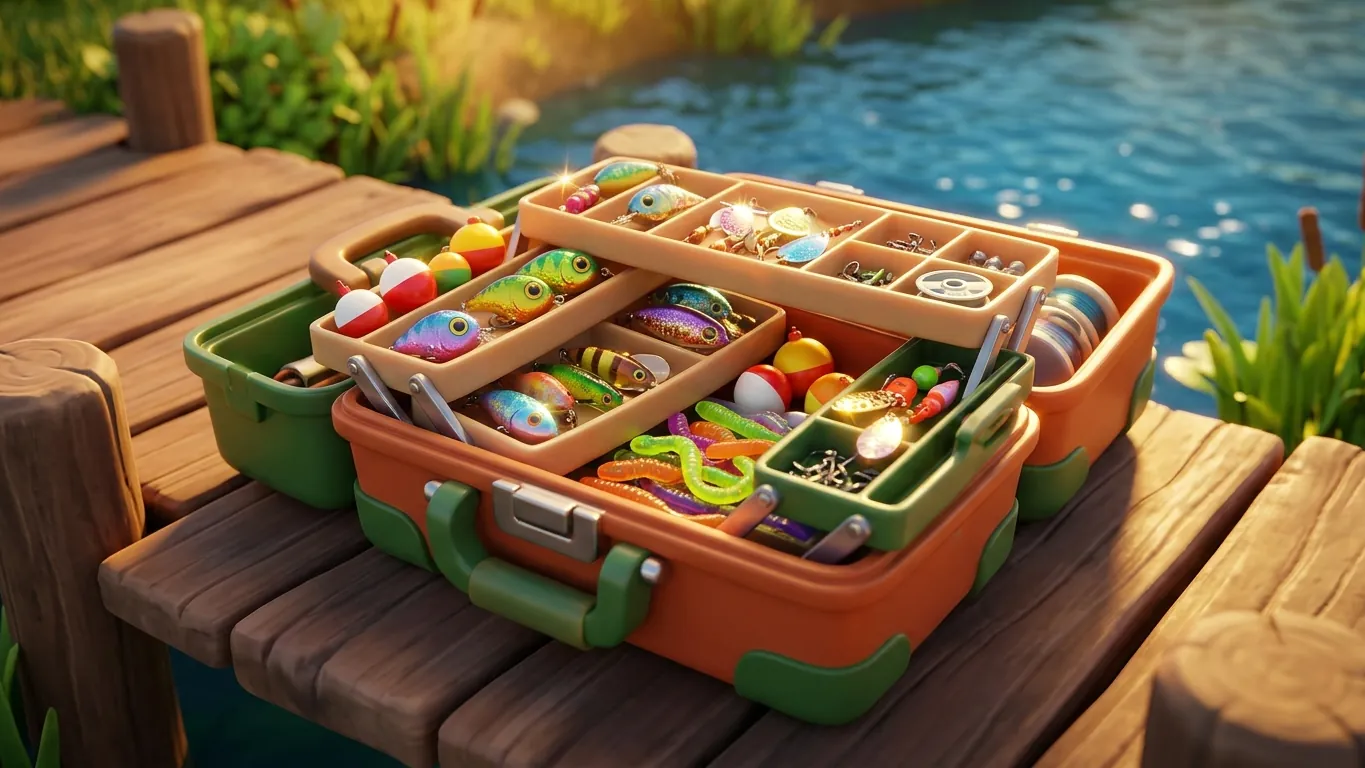
Most fishing games offer two broad categories of tackle. Live or natural bait, such as worms or small fish, is often simpler to use: you cast it, let it sit and wait. Artificial lures usually require more involvement, because the way you retrieve them affects how attractive they are to fish.
Bait tends to be a good starting point for beginners because it lets you focus on reading the bite and setting the hook. Lures add an extra layer of skill and are often better for covering water quickly or targeting specific species. Many players use bait to learn a new area and then switch to lures once they know where the fish are.
Names vary from game to game, but these broad categories appear frequently.
Float on the surface and create splashes or ripples. Often useful in calm conditions or low light.
Rotating blades that flash as you reel. Usually effective when retrieved at a steady pace.
Dive to a certain depth when reeled. Helpful for reaching fish holding below the surface.
Flexible lures that imitate worms or small creatures. Often worked slowly along the bottom.
Weighted lures that you lift and drop. Good for vertical fishing near structure.
A useful way to think about tackle is to ask two questions: how deep is the fish, and how fast does it want food to move? Surface lures are of little use if fish are holding near the bottom, and a slow-sinking worm may be ignored by an active fish chasing fast prey.
When you arrive at a new location, try a lure that covers the middle of the water column at a moderate speed. If nothing happens, adjust one variable at a time. Go deeper or shallower, then faster or slower. Changing too many things at once makes it hard to tell what actually worked.
Some fishing games model lure colour as a factor, while others treat it as purely cosmetic. If your game does take colour into account, a common pattern is that natural colours work in clear water and bright conditions, while brighter or darker colours stand out better in murky water or low light.
If you are unsure whether colour matters in your game, check the in-game description of the lure or any tips the game provides. When information is limited, simple testing is the most reliable approach. Fish the same spot with two different colours for a while and see whether you notice a difference.
Every player has sessions where nothing seems to bite. Before assuming the game is being unfair, run through a quick checklist. Is your lure reaching the right depth? Are you retrieving too quickly or too slowly? Is this the right time of day for the species you want? Have you tried a different spot nearby?
Sometimes the answer is simply to switch from a lure to bait, or the other way around. Fishing games often reward flexibility, and the players who enjoy them most are usually the ones who treat each quiet spell as an invitation to experiment rather than a reason to give up.
 Managing line tension during the fight
Understand how line tension works in fishing video games and learn calm, practical habits for reeling in larger fish without snapping the line.
Read more
 Finding your rhythm on the virtual court
Learn why timing is central to tennis video games and how to build a steady rhythm for groundstrokes, volleys and lobs through focused practice.
Read more
 Starting every point on your terms
Practical ideas for improving your serve and return in tennis video games, from mixing placement and pace to staying patient on the return.
Read more