Where to stand and what to hit
Good positioning makes every shot easier in tennis games. This guide explains how to recover after each shot, when to approach the net and how to choose shots with purpose.
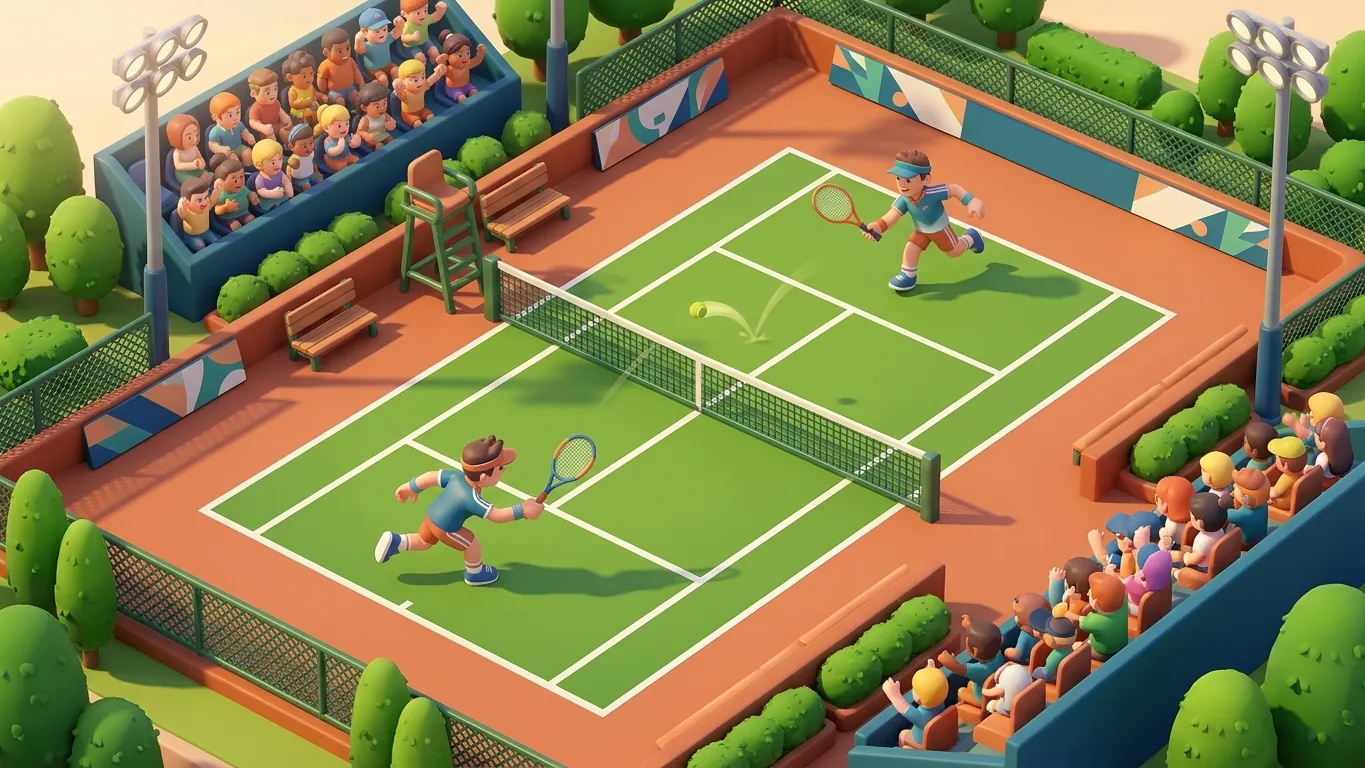
The value of recovery
One of the most common habits among newer players in tennis games is staying where they hit the ball. After a wide forehand, they remain near the sideline, leaving the rest of the court open. A simple fix is to recover toward the centre of the baseline after each shot.
Many games give you a short window after a swing to start moving. Use it. Even a few steps back toward the middle can turn a difficult next shot into a comfortable one. Over a match, consistent recovery often makes a bigger difference than any single impressive shot.
Baseline play
Most rallies in tennis games begin at the baseline. From there, deep shots that land near your opponent's baseline tend to keep them on the defensive. Shots that land short give them time to step in and attack.
A useful approach is to aim cross-court during neutral rallies. The ball travels over the lower part of the net and has more court to land in, which usually means fewer errors. When you receive a short or weak reply, that is a good moment to change direction down the line or move forward.
Approaching the net
Coming to the net can end points quickly, but it also leaves you exposed to passing shots and lobs. In many tennis games, the best time to approach is after you have hit a strong, deep shot that forces your opponent backward or to the side.
When you move forward, try to position yourself to cover the most likely reply. If your approach shot went down the line, shift slightly toward that side. Once at the net, short, controlled volleys into open space are often more effective than powerful ones. Be ready to move back if you see a lob coming.
Choosing shots with purpose
Every shot in a tennis game can have an intention: keep the rally going, move the opponent, set up an attack or finish the point. Thinking about this intention helps you pick the right shot rather than pressing buttons by habit.
If you are out of position, a high, deep shot can buy time to recover. If your opponent is far back, a drop shot may be effective. If they are rushing the net, a lob or a low passing shot can work. Matching the shot to the situation tends to produce better results than always going for maximum power.
Adapting to court surfaces
Some tennis games simulate different court surfaces, each with its own feel. Faster surfaces may reward aggressive play and net approaches, while slower ones often favour longer baseline rallies and patience. Bounce height and player movement can also change.
If your game offers different surfaces, try the same strategy on each and note how it feels. Small adjustments, such as standing further back on high-bouncing courts or approaching the net more on quick ones, can help. Treat surface variety as a way to broaden your skills rather than as an obstacle.
Related articles
 Two genres, one set of habits
An opinion piece on why fishing and tennis video games, despite their different pace, reward the same habits of patience, observation and timing.
Read more
Practising with purpose
Build a short, focused practice routine for fishing and tennis video games, with steps for warming up, isolating one skill and reviewing your progress.
Read more
 The core mechanics of fishing games
New to fishing video games? Learn the core loop of casting, waiting, hooking and reeling, and how progression usually works in the genre.
Read more